Coach’s Corner: MURPH & THE Weighted Vest
MURPH and The Weighted Vest
By
May 19, 2026

Hey Team,
With MURPH coming up, one of the biggest questions we get every year is:
“Should I wear a vest?”
The short answer:
Maybe. Maybe not. And that’s okay.
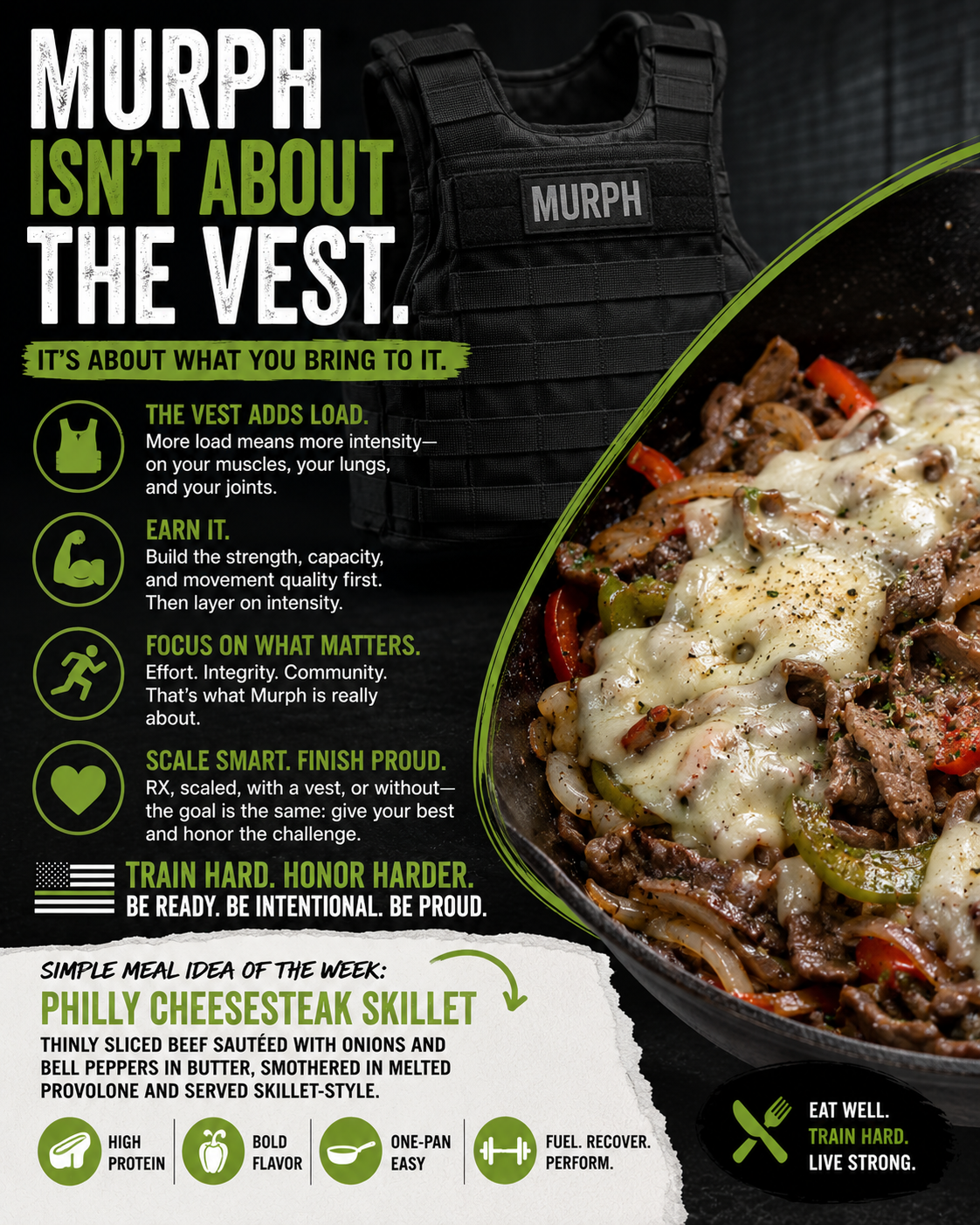
The purpose of Murph is not just to wear a vest.
The purpose is:
• Effort
• Challenge
• Honoring the workout and what it stands for
A vest is simply an added layer of intensity.
It increases:
• Load
• Fatigue
• Heat
• Stress on muscles, joints, and tendons
And while that can be appropriate for some athletes, it’s not necessary for getting the intended stimulus or having a meaningful experience.
Earn the Vest!
A few weeks ago we discussed: Threshold Training:
Mechanics → Consistency → Intensity
A vest is intensity.
Before adding it, ask yourself if you're honestly able to show:
- Consistent movement quality
- Strong push-up and pull-up mechanics
- Running capacity
- Shoulder stability
- Experience managing fatigue under volume
The vest shouldn’t expose a weakness in our movements. It should magnify strengths that are already there.
Dont Forget:
Muscles Adapt Faster Than Tendons
Your muscles often feel ready before your tendons and connective tissue are.
Adding external load to High-volume pull-ups, Push-ups, and Running creates a lot more stress on elbows, shoulders, knees, and ankles.
That’s why building strict strength and movement quality first matters so much.
Long-term fitness always wins over ego.
The Big Idea
A vest does not make MURPH more meaningful.
Effort does.
Some athletes will wear one.
Some won’t.
Some will scale volume or movements.
And all of those athletes are still doing MURPH.
The goal is to challenge yourself appropriately, move well, and finish proud of the effort you gave.
That’s what matters.
Simple Meal Idea of the Week:
Preparation
In a large skillet over medium heat, melt 1 Tbsp butter. Add sliced onion and peppers, season with salt and pepper, and sauté for 6–8 minutes until soft and slightly caramelized. Add garlic and cook for 1 minute more. Remove veggies and set aside.
Increase heat to medium-high. Add the remaining 1 Tbsp butter to the pan. Sear the thinly sliced steak in batches if necessary — cook for 1–2 minutes per side until just browned. Season with paprika, Worcestershire (if using), and salt and pepper.
Return sautéed veggies to the skillet with the beef. Toss everything together evenly. Spread into an even layer and top with provolone slices. Cover the skillet and reduce heat to low. Let sit for 2–3 minutes until the cheese is melted and bubbly.
Drizzle with a little olive oil off heat if desired. Garnish with parsley. Serve hot straight from the skillet, or spoon into lettuce wraps, over cauliflower mash, or into a low-carb bowl.
Macronutrients
(per serving, makes 2)
Protein: 48g
Fat: 45g
Carbs: 7g
See you in class,
Coach Matt CF L3